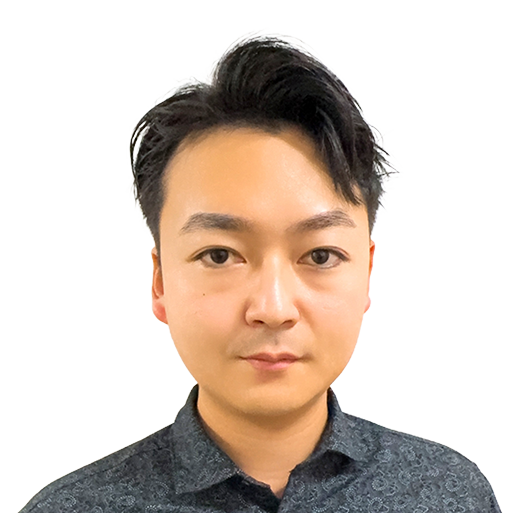
Satoshi Tajima, PhD
Hydrogeologist
E-mail: satoshi.tajima[at]unine.ch
Satoshi Tajima is Postdoctoral Fellow at the Centre for Hydrogeology and Geothermics, University of Neuchâtel, and at the Physics Institute, University of Bern. He earned his PhD from the University of Tokyo in 2025.
As a hydrogeologist, he investigates the dynamics of complex physical processes in subsurface environments, such as solute transport, density-driven flow, and surface-subsurface hydrological interactions, primarily through numerical modelling and stochastic approaches.
News
-
2025-11-29: Released a preprint of a review paper on ESS Open Archive .
(Tajima, S., Purtschert, R., Savard, M.–C., Rosier, M., Kotra, K. K., Therrien, R., Coulombe, C., Müller, C., Masse–Dufresne, J., Richard, F., Bertone, L., Barbecot, F., Lucas–Picher, P., Tigona, R., Corcho Albarado, J. A., & Brunner, P. (2025). Groundwater in the Pacific Islands under Climate Change. Preprint at ESS Open Archive.)
-
2025-11-09: Published a paper in Water Resources Research .
(Tajima, S. & Dentz, M. (2025). Tides and heterogeneity drive trapping and chaotic mixing in coastal aquifers. Water Resources Research, 61(11), e2025WR040620.)
-
2025-06-14: Published a paper in Advances in Water Resources .
(Tajima, S. & Dentz, M. (2025). Transient forcing in heterogeneous aquifers drives solute containment and chaotic mixing. Advances in Water Resources, 203, 105021.)